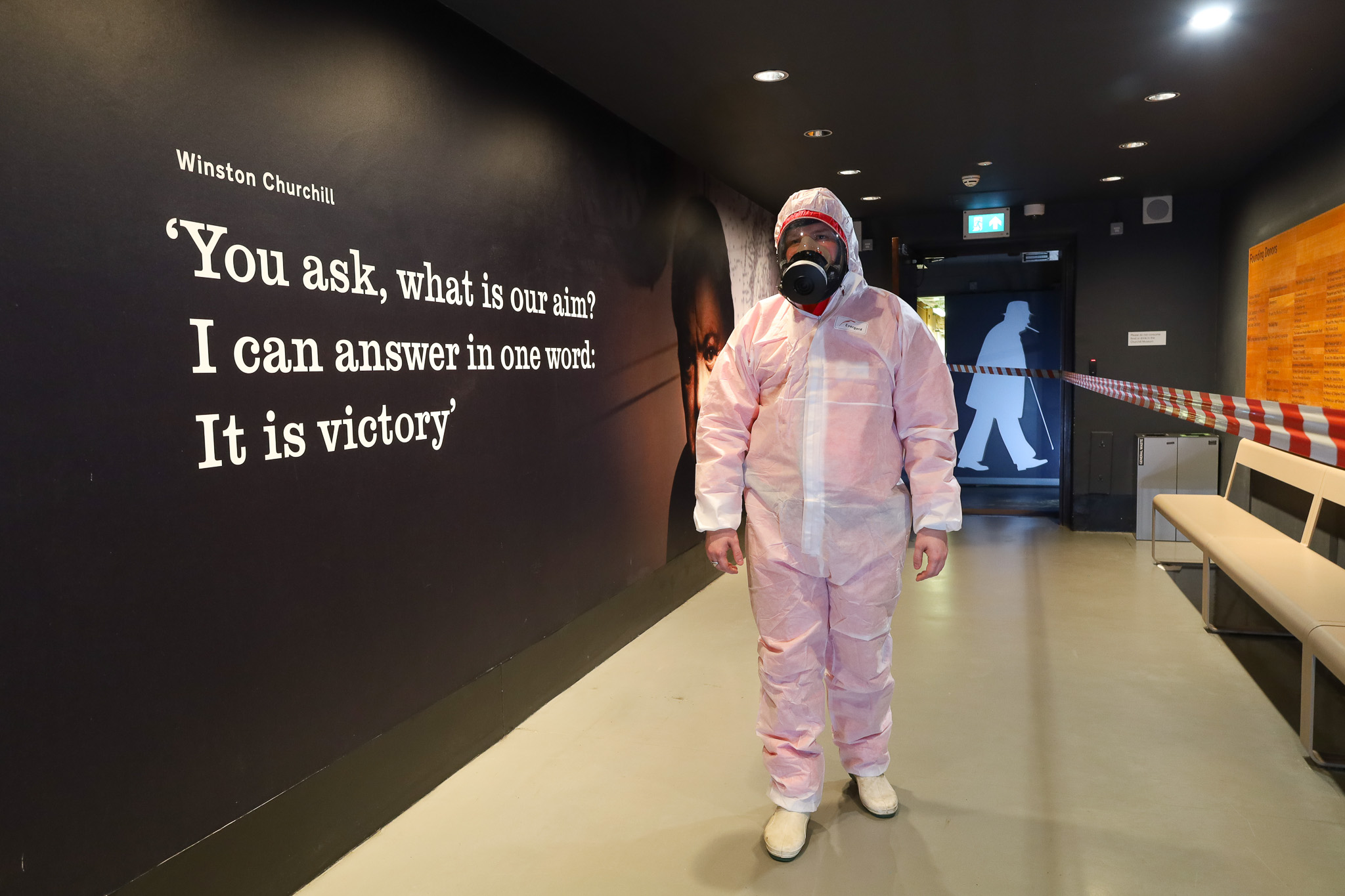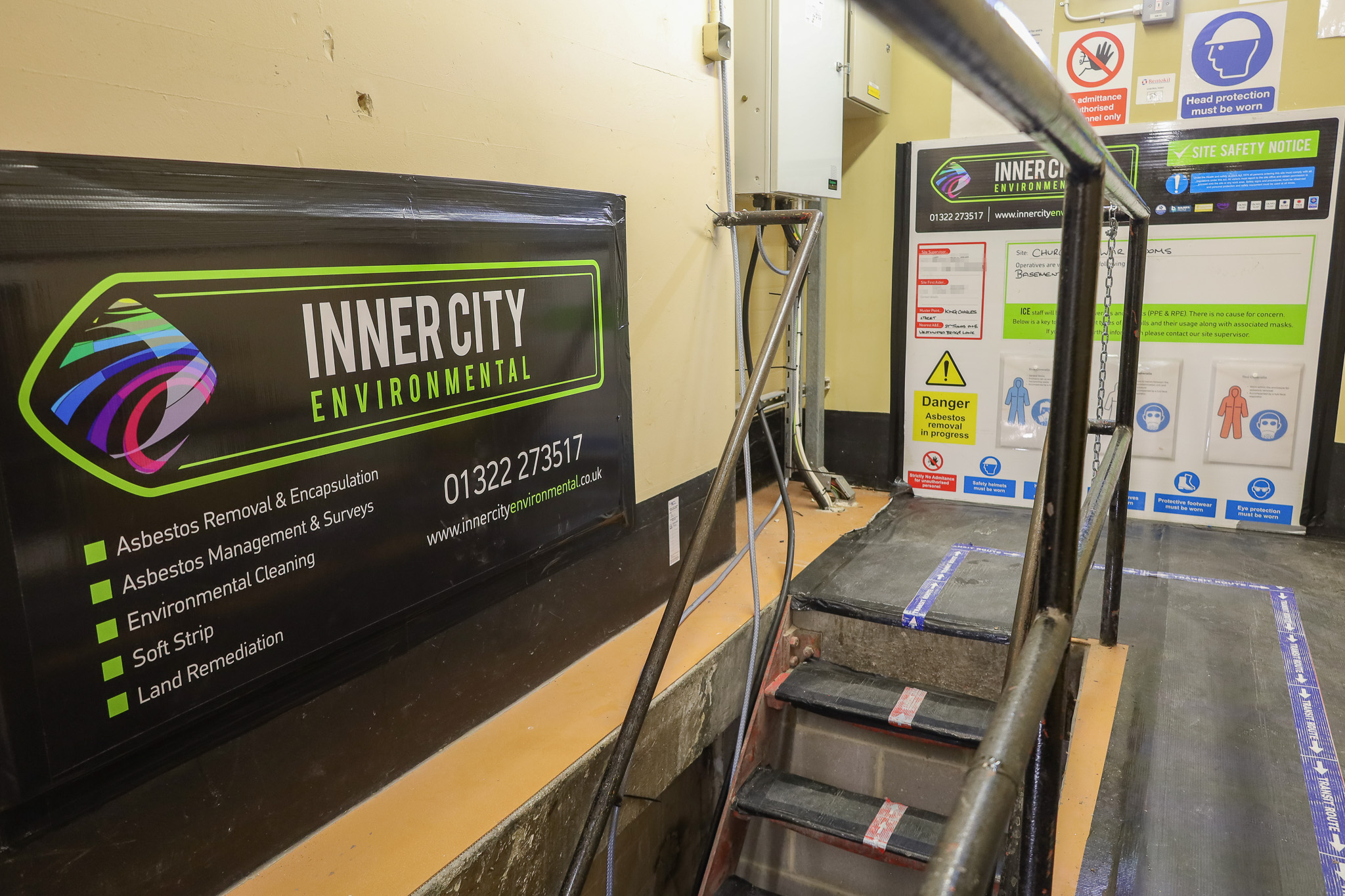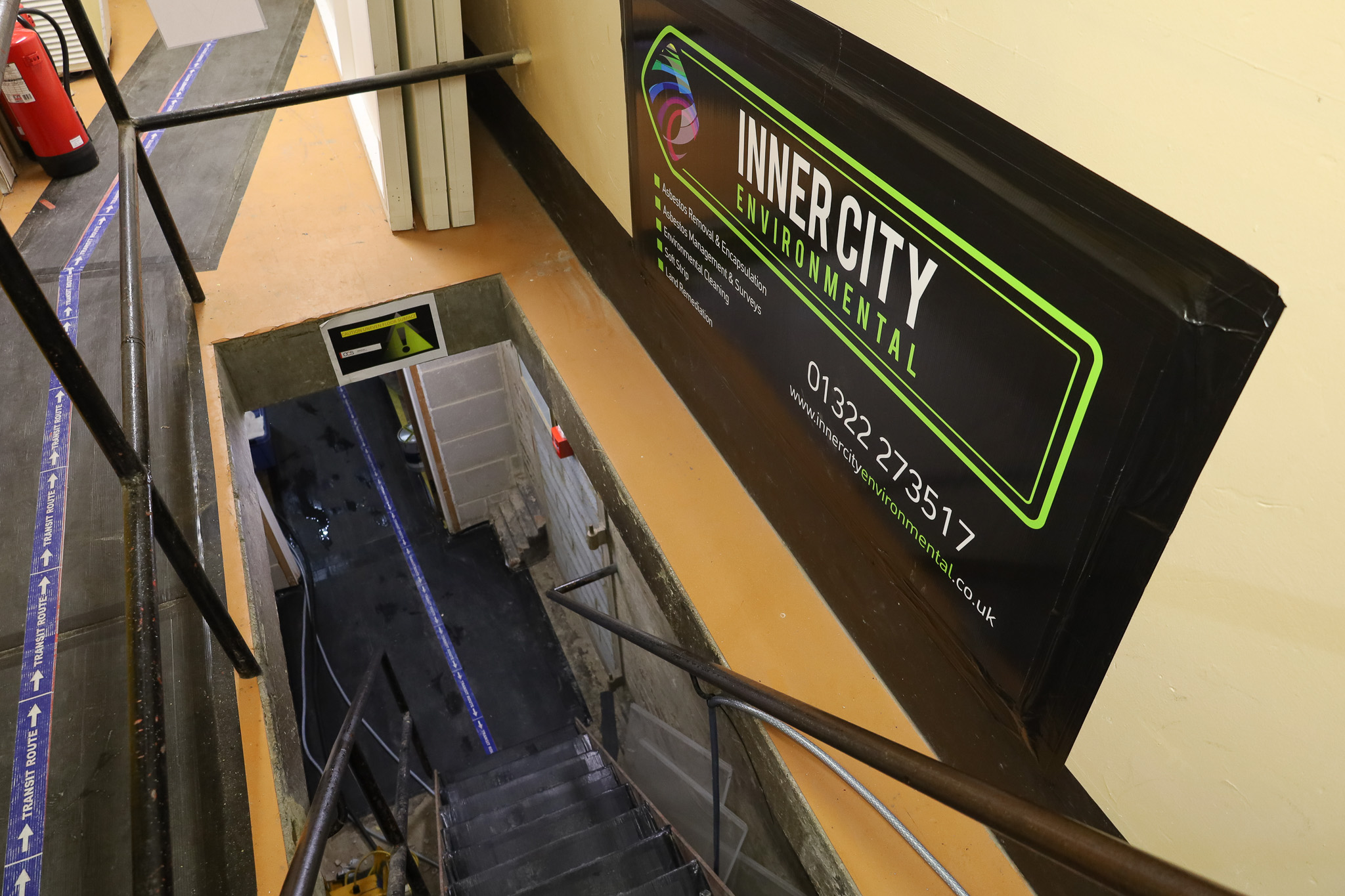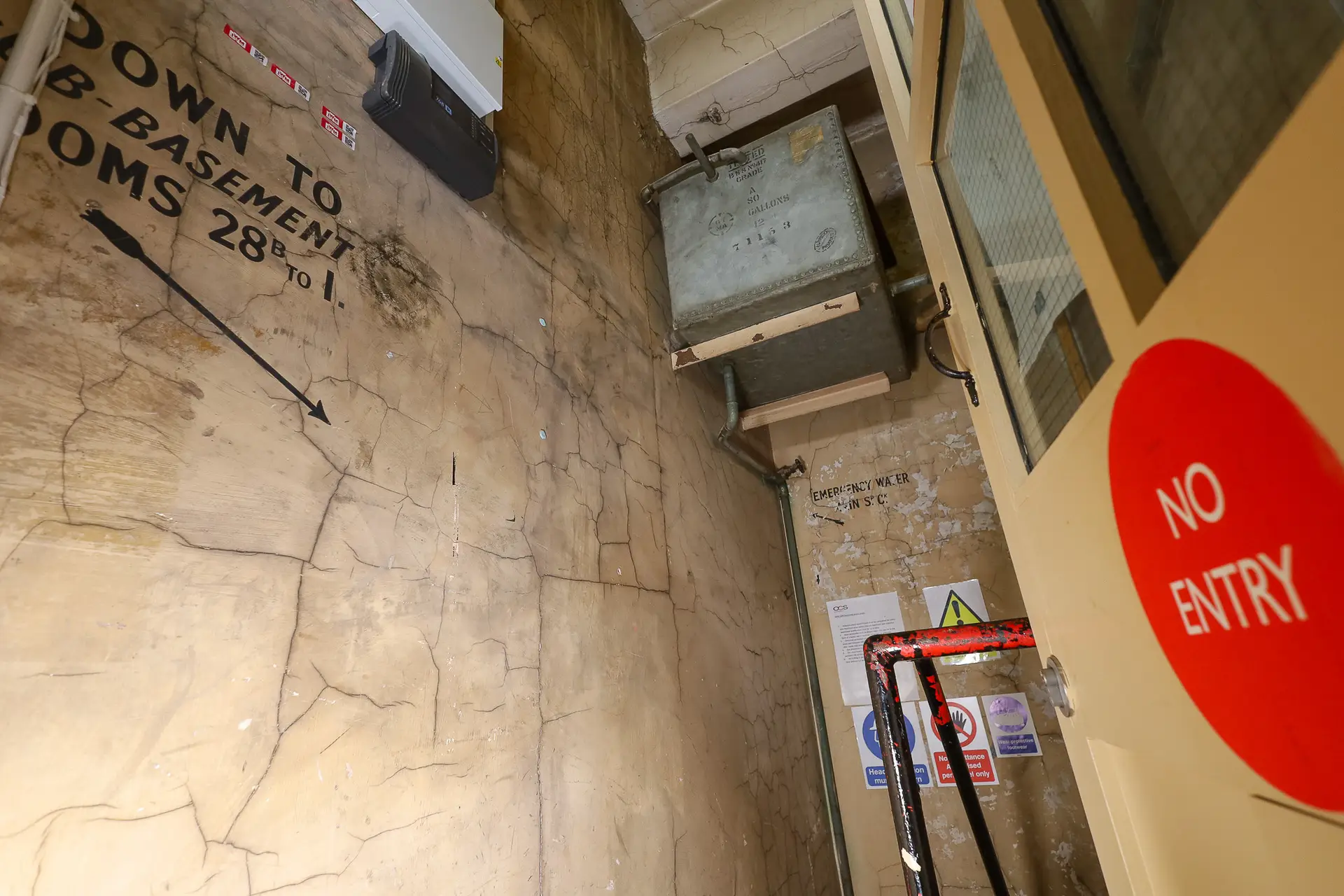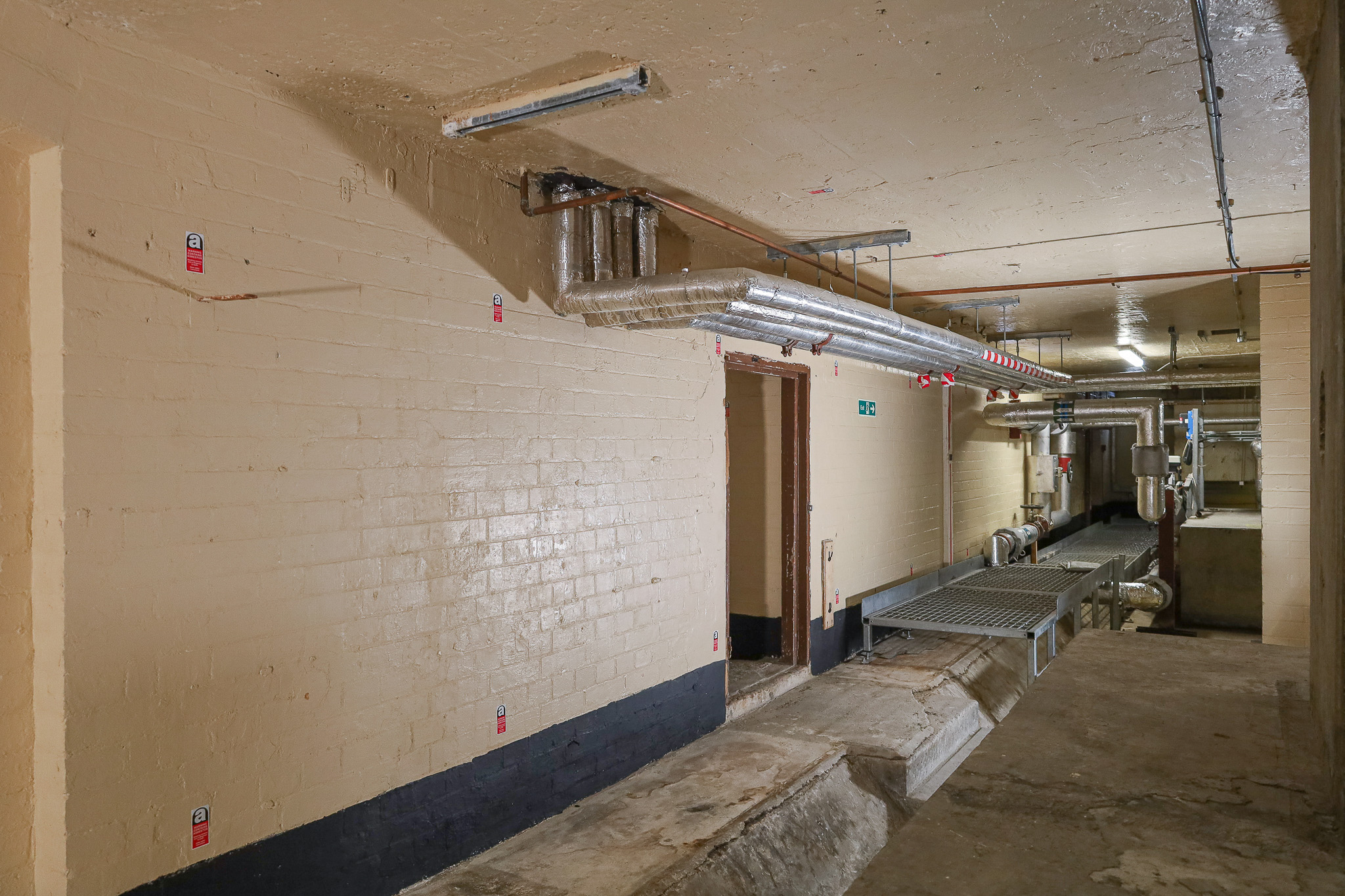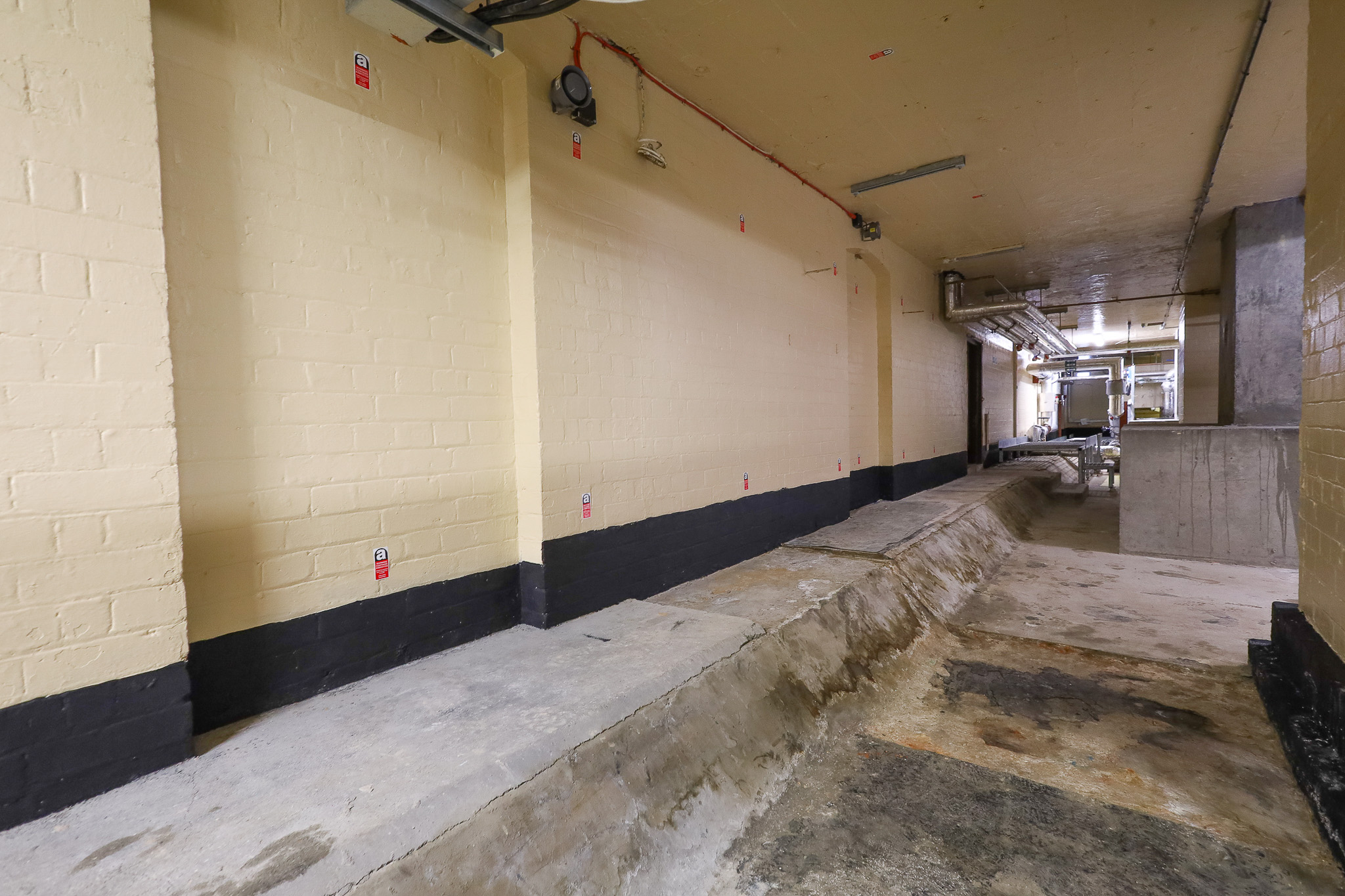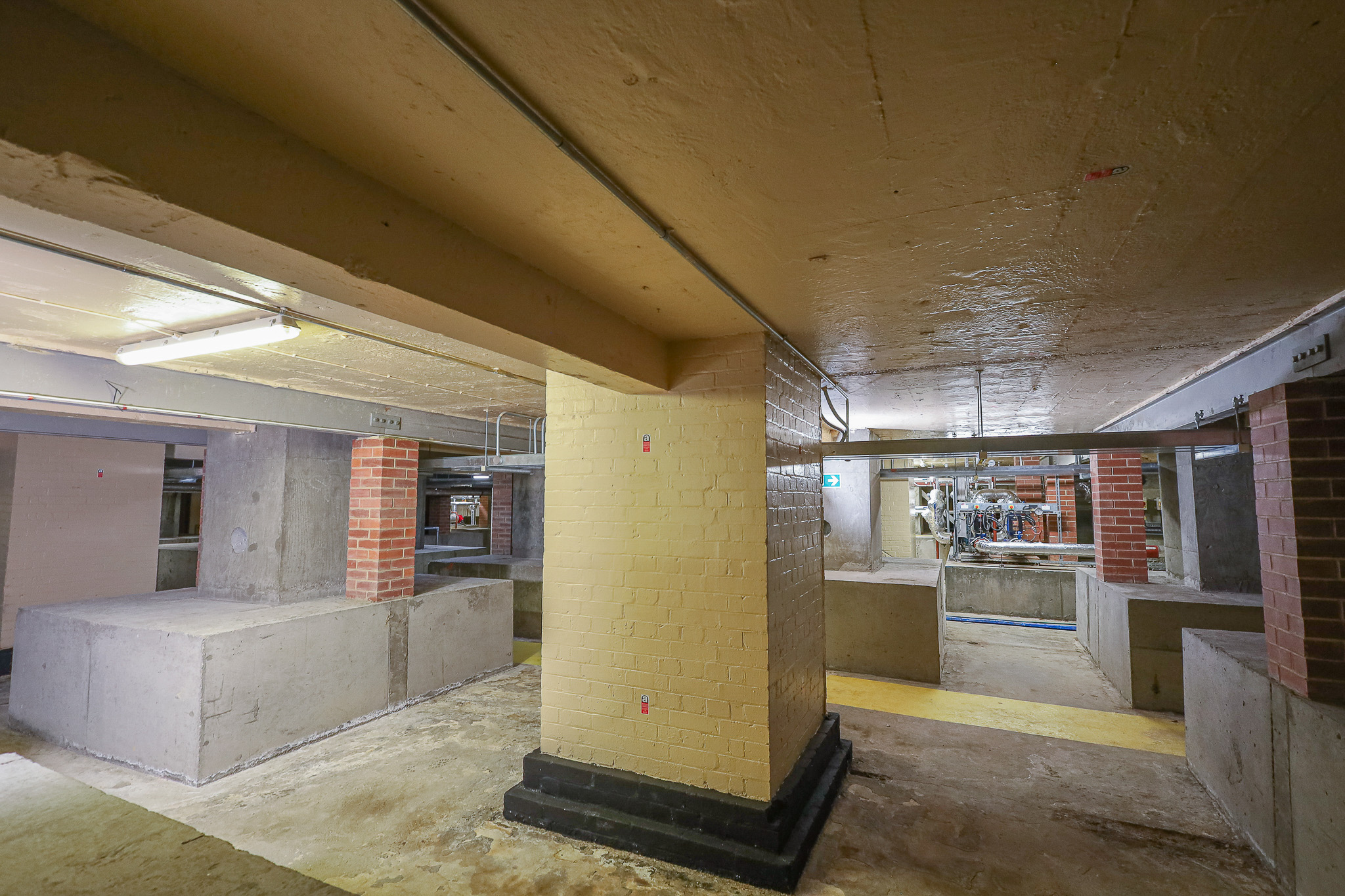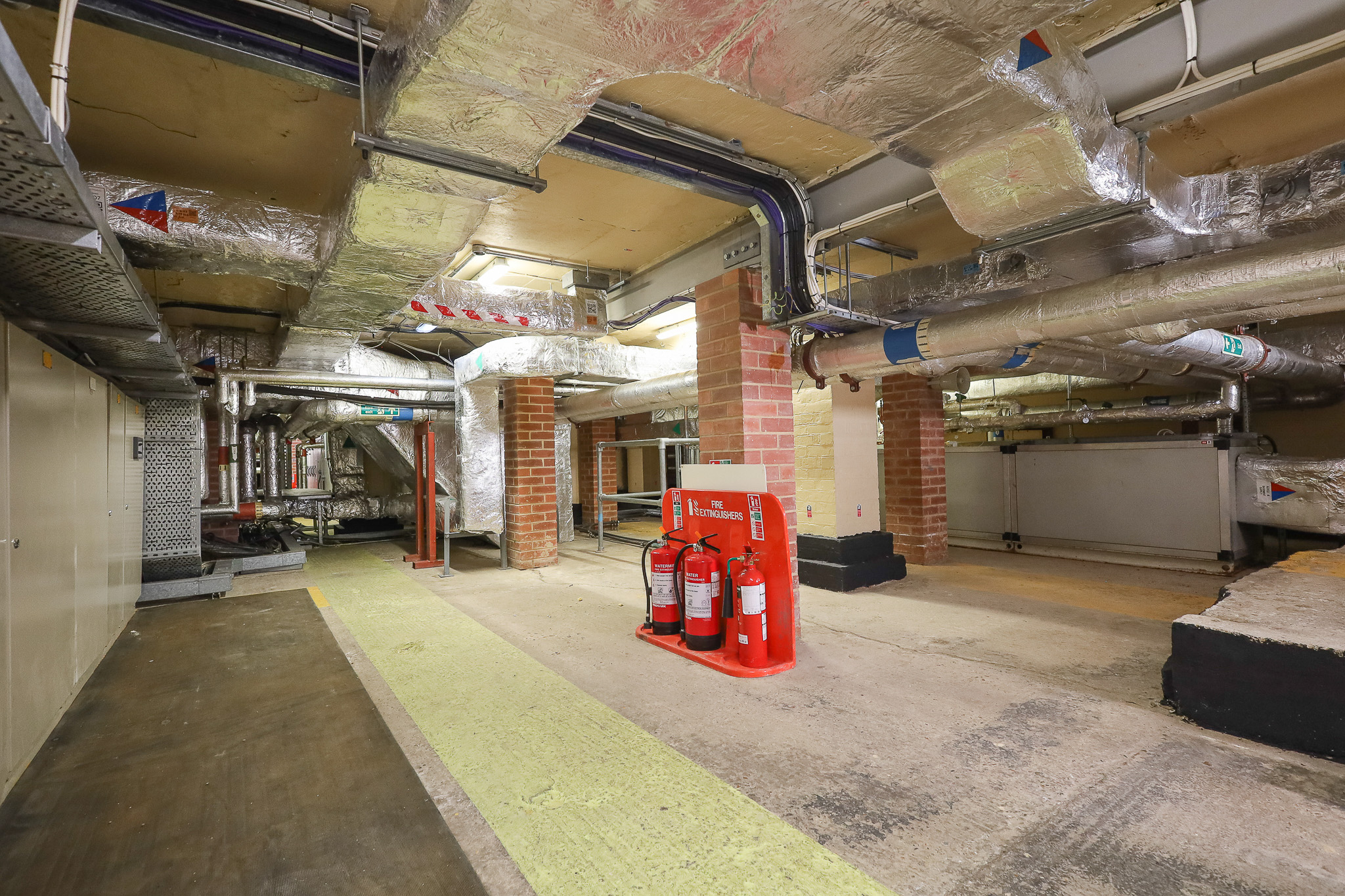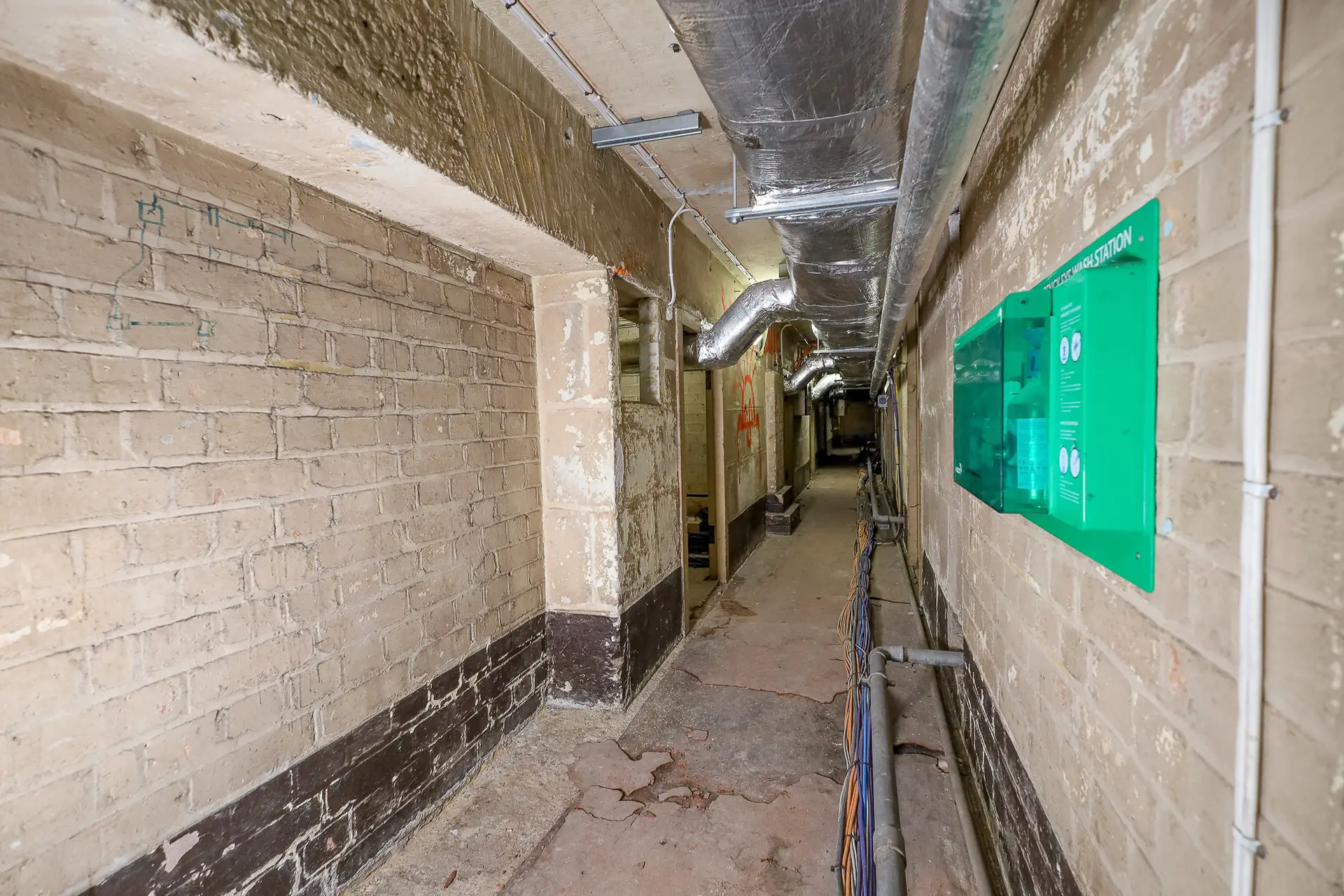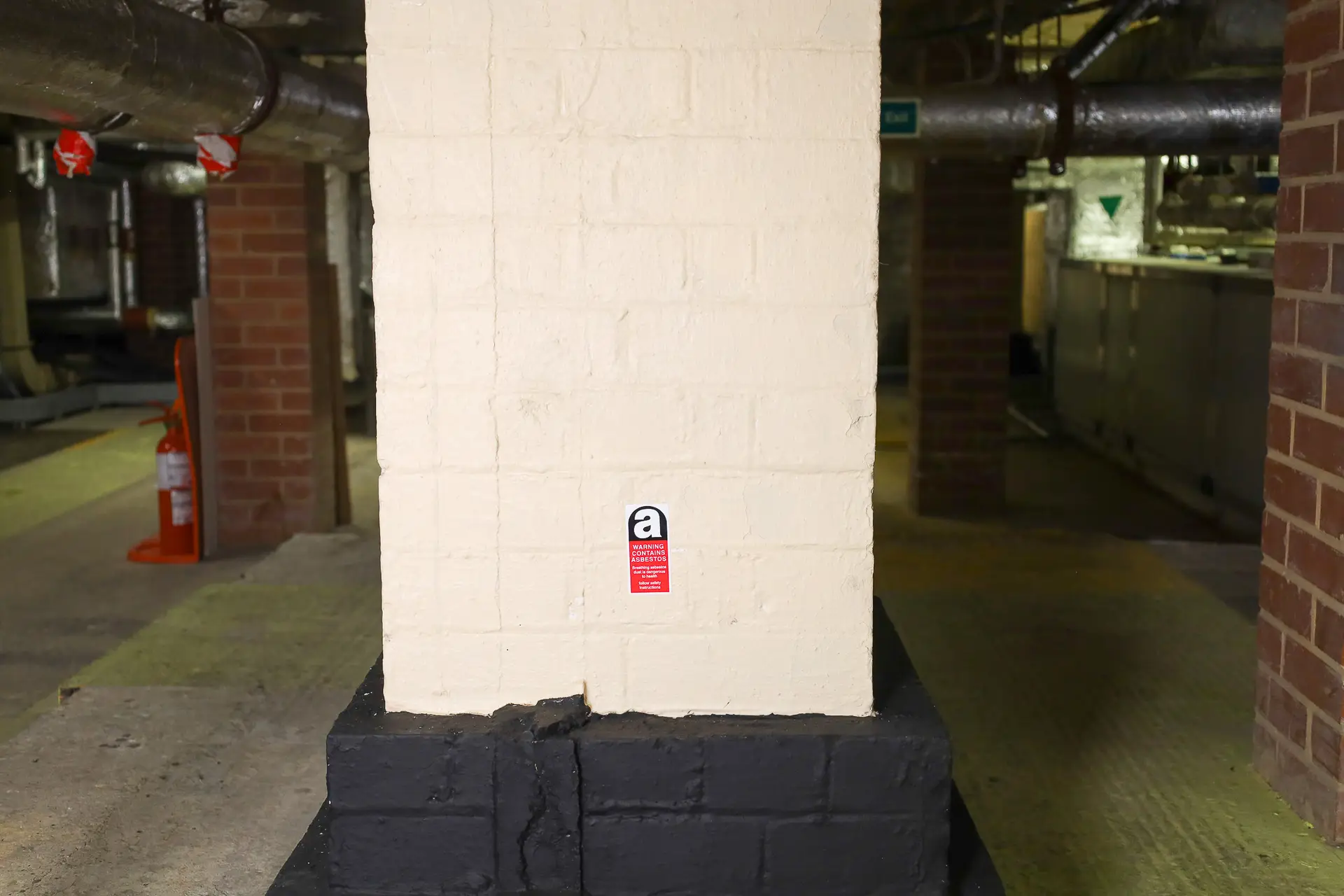
Inner City Environmental is delighted to showcase its work at the historically renowned Churchill War Rooms, part of the Imperial War Museum (IWM) estate. Our team was honoured to be trusted in preserving the historic underground headquarters used by Winston Churchill during the Second World War. As part of essential safety and compliance upgrades, IWM commissioned the complete remediation of degraded asbestos residues in the subbasement areas. The project was delivered in a live, high-security heritage environment while ensuring no disruption to the museum’s daily public operations.
Scope of Works
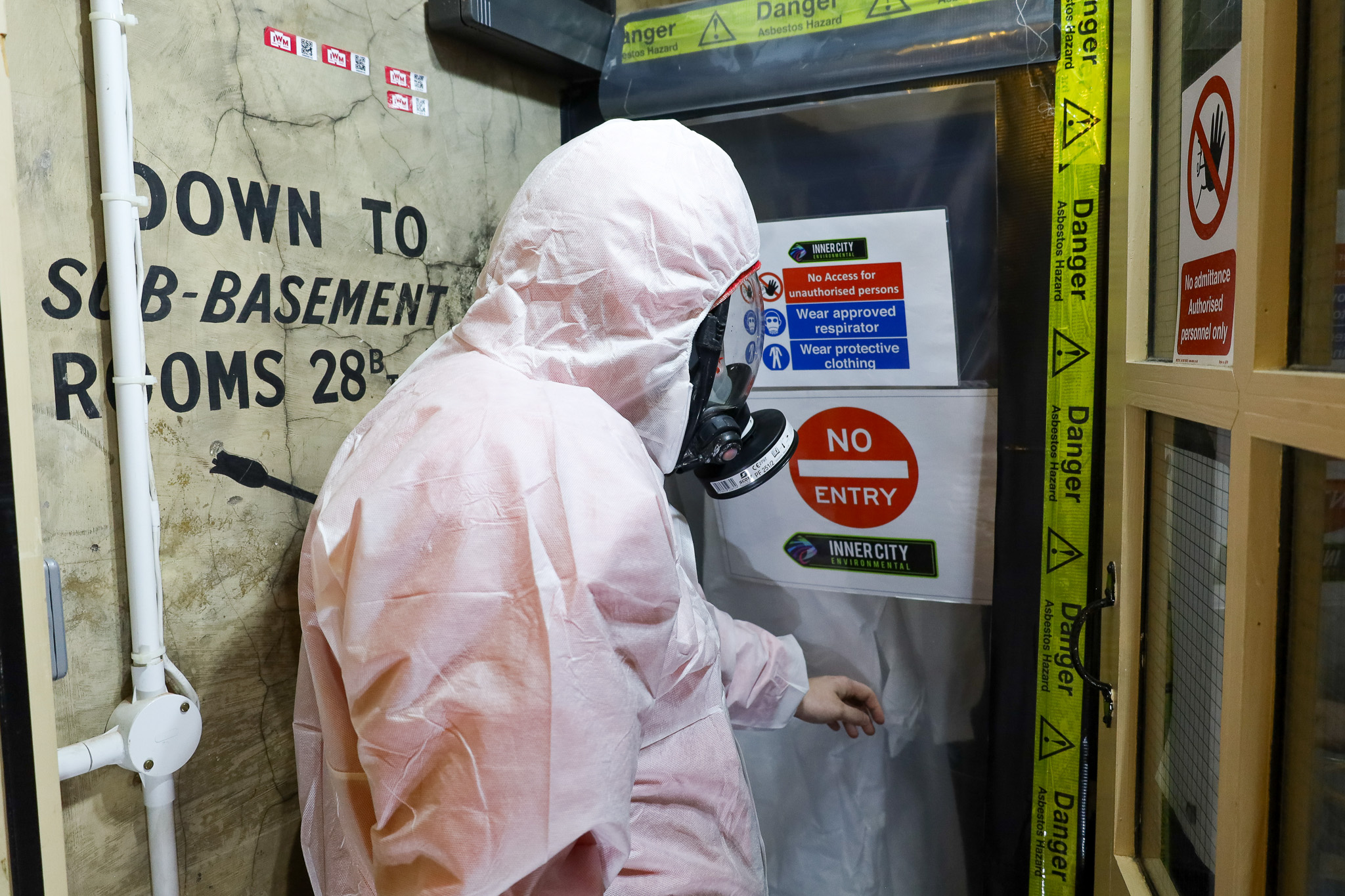
Safe removal and disposal of asbestos thermal insulation residues from walls, columns, and ceilings across six areas in Basement Level 2, including multiple plant rooms and the central sub-basement. Additional works included verification, testing, and replacement of fire dampers located within the asbestos-contaminated zones.
Challenges
- Confined sub-basement spaces with restricted access via narrow stairs and inter-room hatches.
- Working in close proximity to live plant and utilities within asbestos-contaminated areas.
- Heritage constraints requiring careful protection of historic fabric and colour-matched reinstatement in consultation with Historic England.
- Strict HAVS management and the need to maintain absolute cleanliness for daytime museum use.
- Additional complexity of safely accessing, testing, and replacing fire dampers in contaminated zones.
Solution
We delivered a professional, phased remediation programme using our preferred scrape and encapsulate methodology with non-vibratory abrasive cleaning techniques. This approach proved highly effective and was reflected in our competitive pricing and programme.
Key delivery elements included:
- Remediation Methodology: Abrasive wet scraping followed by full encapsulation using HSE-approved sealants. We deliberately avoided needle gunning due to HAVS restrictions and the poor reliability of electric tools, which frequently require replacement and cause downtime.
- Fire Damper Works: In addition to the core asbestos scope, we successfully verified, tested, and replaced fire dampers within the contaminated areas. All works were carried out under controlled asbestos conditions with full containment, ensuring compliance with both fire safety and asbestos regulations.
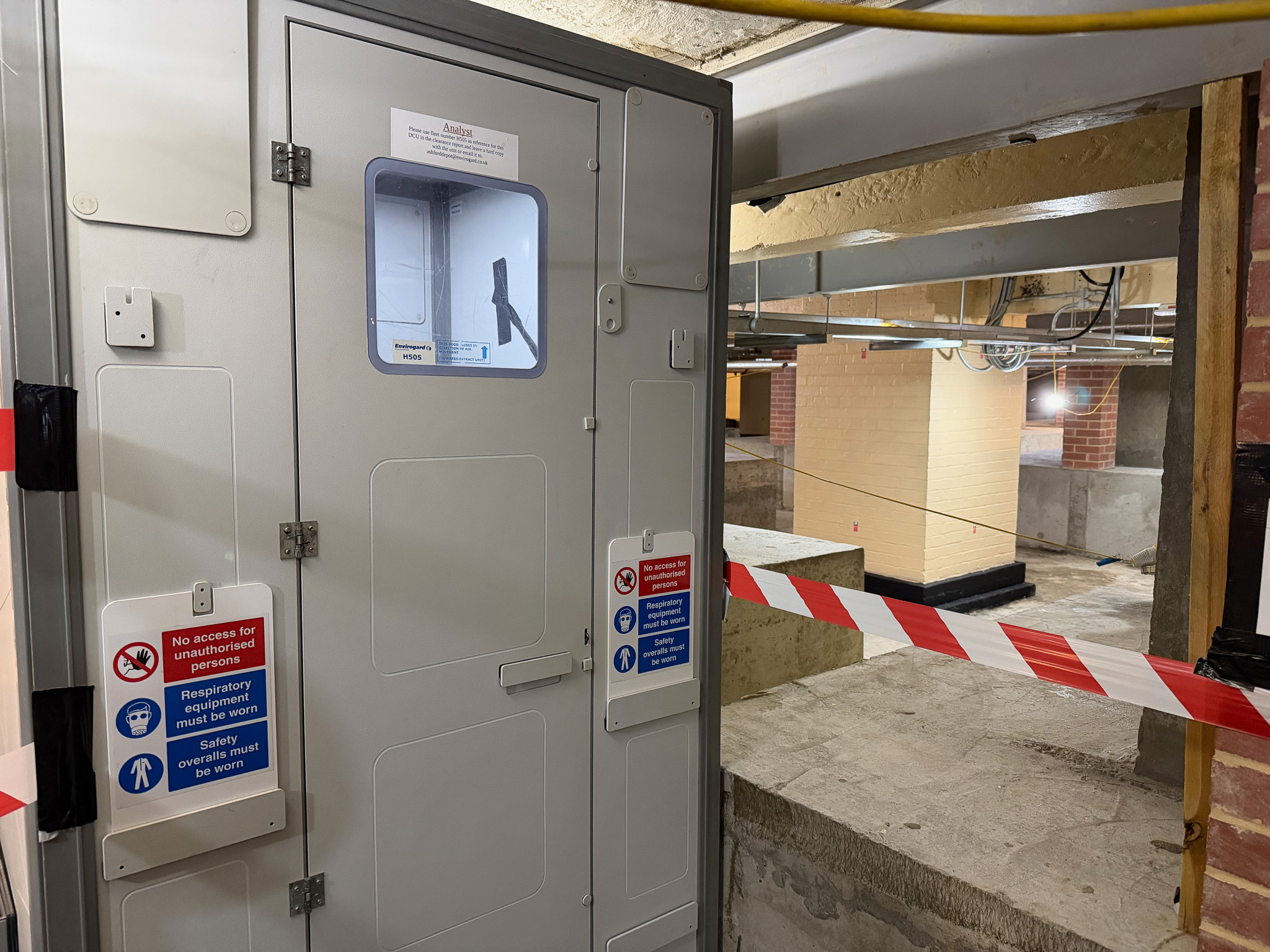
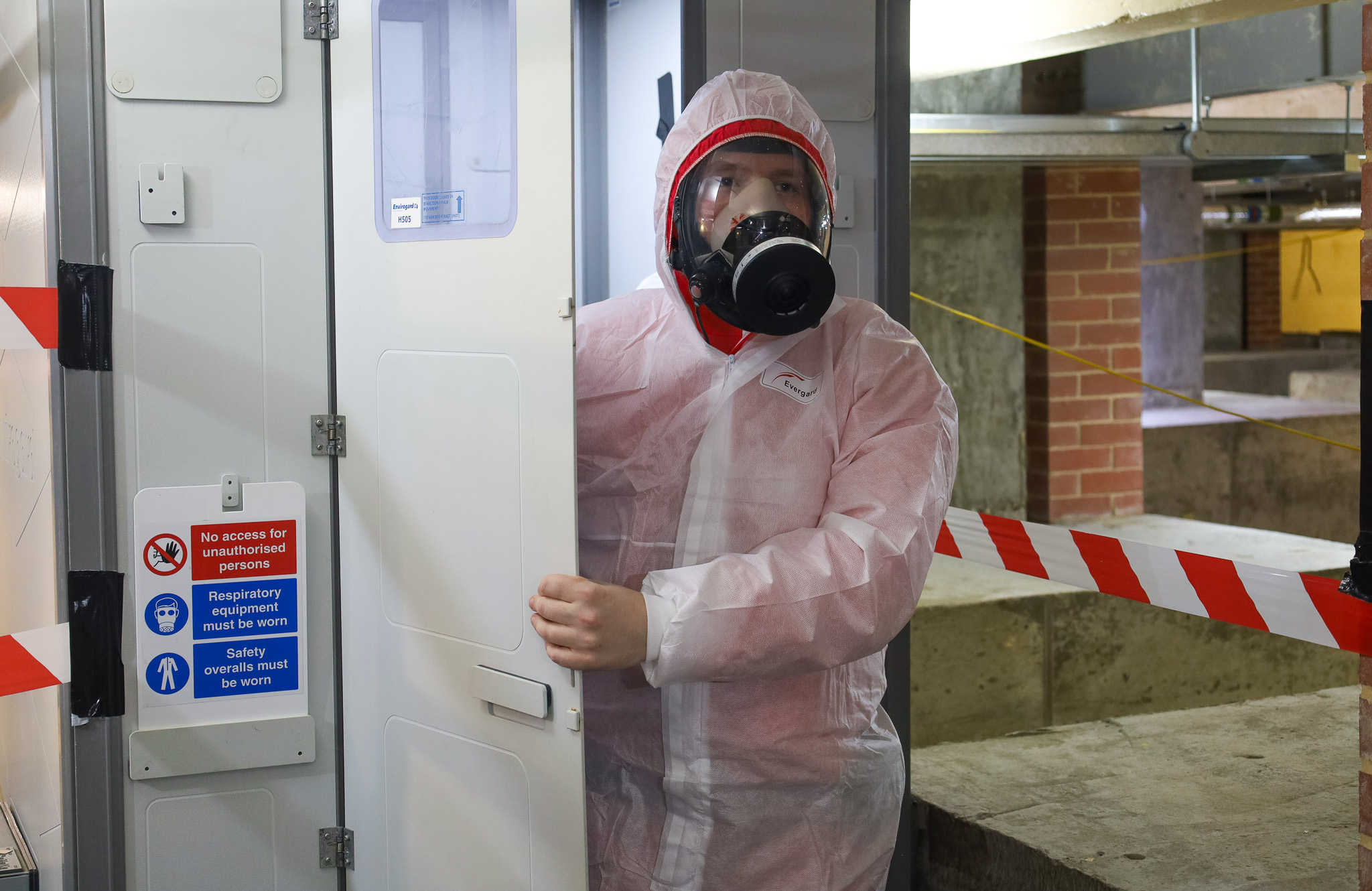
- Site Setup and Operations: Two modular Decontamination Units (DCUs) were installed in Plant Room 1 (Area 6). Works ran from 18:00 to 06:00, with an additional hour (06:00–07:00) dedicated to thorough cleaning of operational and front-of-house areas. Weekend and bank holiday working was incorporated to maintain momentum.
- Collaborative Delivery: Close partnership with IWM Estates, Ayer Associates, and Tetra Tech, who provided continuous on-site air monitoring and 4-stage clearances. Individual Risk Assessment Method Statements (RAMS) and pre-start meetings were held for each of the six areas.
- Heritage and Operational Focus: Retained furniture, fixtures, and equipment (FFE) was identified, cleaned under controlled conditions, and relocated. Encapsulation colours were agreed early with Historic England. Enclosure access was restricted to our trained staff only.
- Sustainability: High levels of waste segregation and recycling, and energy-efficient equipment helped minimise environmental impact.
Outcome
Delivering works within a live, high‑security heritage environment demanded absolute control over safety, programme and quality. Through disciplined planning, night‑shift operations and close collaboration with all stakeholders, ICE successfully achieved the required outcomes while safeguarding both museum operations and the historic fabric of the site.
- Safety and Compliance: Zero incidents or near-misses across the entire project. All air monitoring results remained well below HSE action levels. Full compliance with CAR 2012, CDM 2015, and fire safety requirements.
- Scope Delivery: Successful asbestos remediation across six sub-basement areas, plus verification, testing, and replacement of fire dampers in contaminated zones.
- Programme and Quality: Project completed on time and within budget, with every area achieving successful 4-stage clearance and professional handover.
- Client Outcome: The sub-basement is now asbestos-safe, with improved fire safety provisions, providing a secure environment for IWM staff and preserving the historic integrity of this nationally significant site.
This outcome demonstrates ICE’s ability to deliver technically complex asbestos and fire safety works within sensitive, operational and heritage‑critical environments — providing clients with confidence that safety, compliance and quality are never compromised.